Discovering the Río Samaná
Between sport, culture and tourism, discover one of Colombia’s last free-flowing rivers.
14 Aug 2026
Discovering the Río Samaná
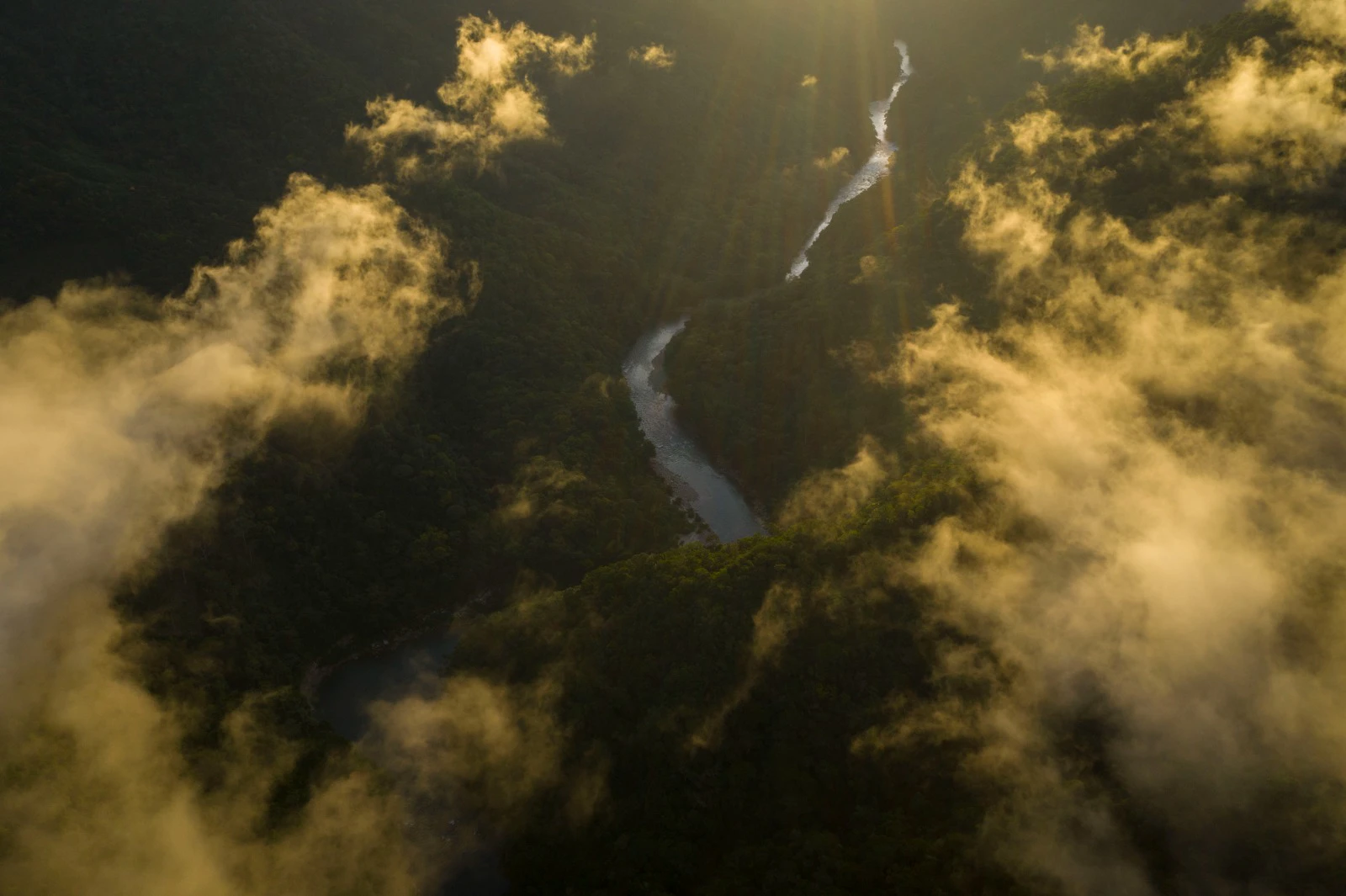
In the heart of Antioquia lies one of Colombia’s last free-flowing rivers: the Río Samaná. For many years, the region was controlled by the FARC and the National Liberation Army (ELN), making it a feared and largely avoided territory. However, in the 2010s, the area began to experience a new phase of development.
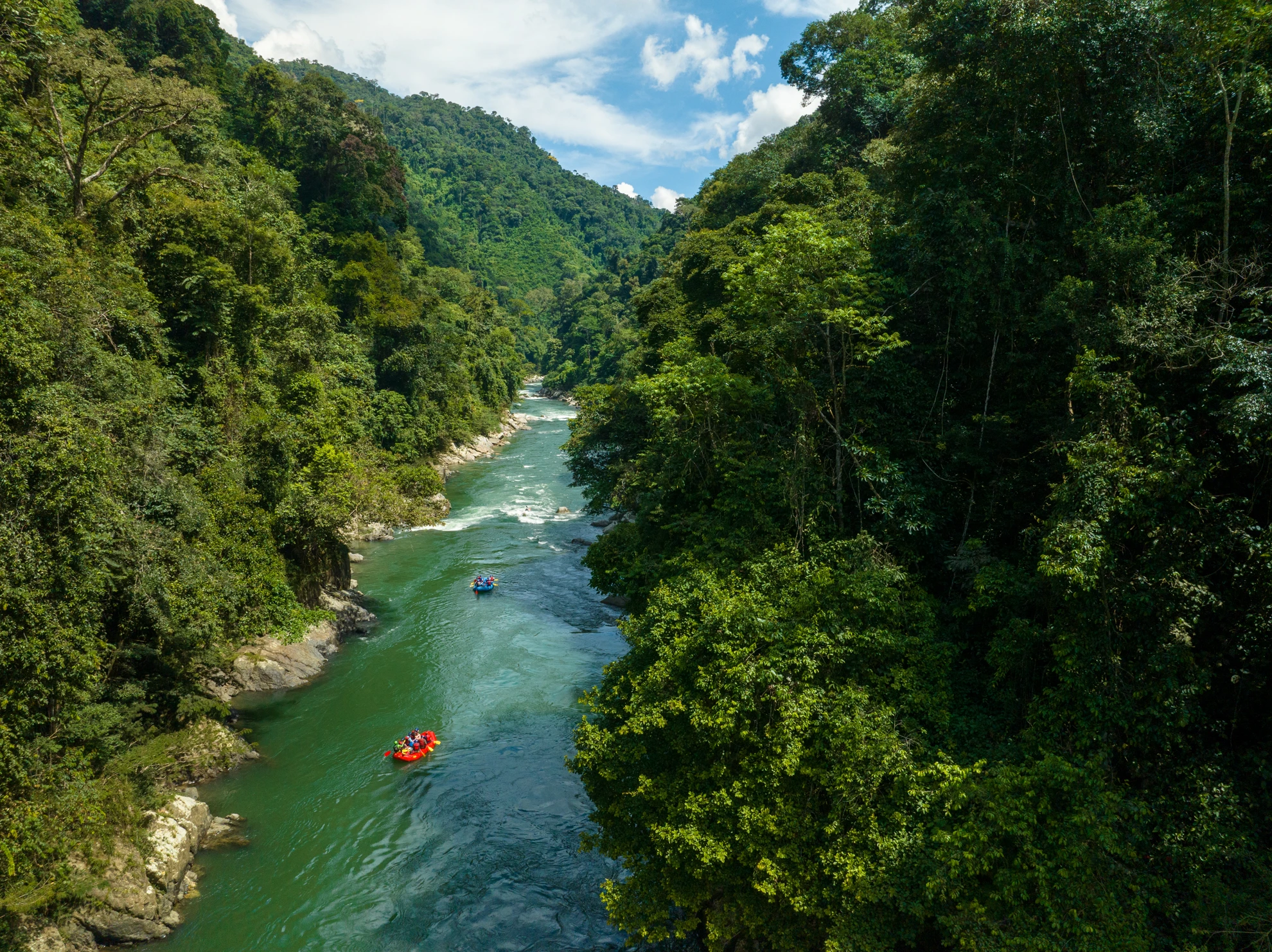
A true biodiversity hotspot, the Samaná basin is home to five of Colombia’s main ecosystems, ranging from páramos to tropical rainforests. Today, this wild river has become a symbol of nature conservation and responsible tourism, in a region where the construction of hydroelectric dams continues to pose a threat.
A River at the Heart of a Dilemma
Protection or Exploitation?
It was during the 1970s and 1980s that the Colombian government selected this region for the development of new dam systems. While these projects contributed to the country’s economic development, they also came at a significant cost to local communities, some of whom were forced to leave their land.
Today, hydropower remains an important source of energy for Colombia. This dependence continues to fuel strong social and environmental tensions.
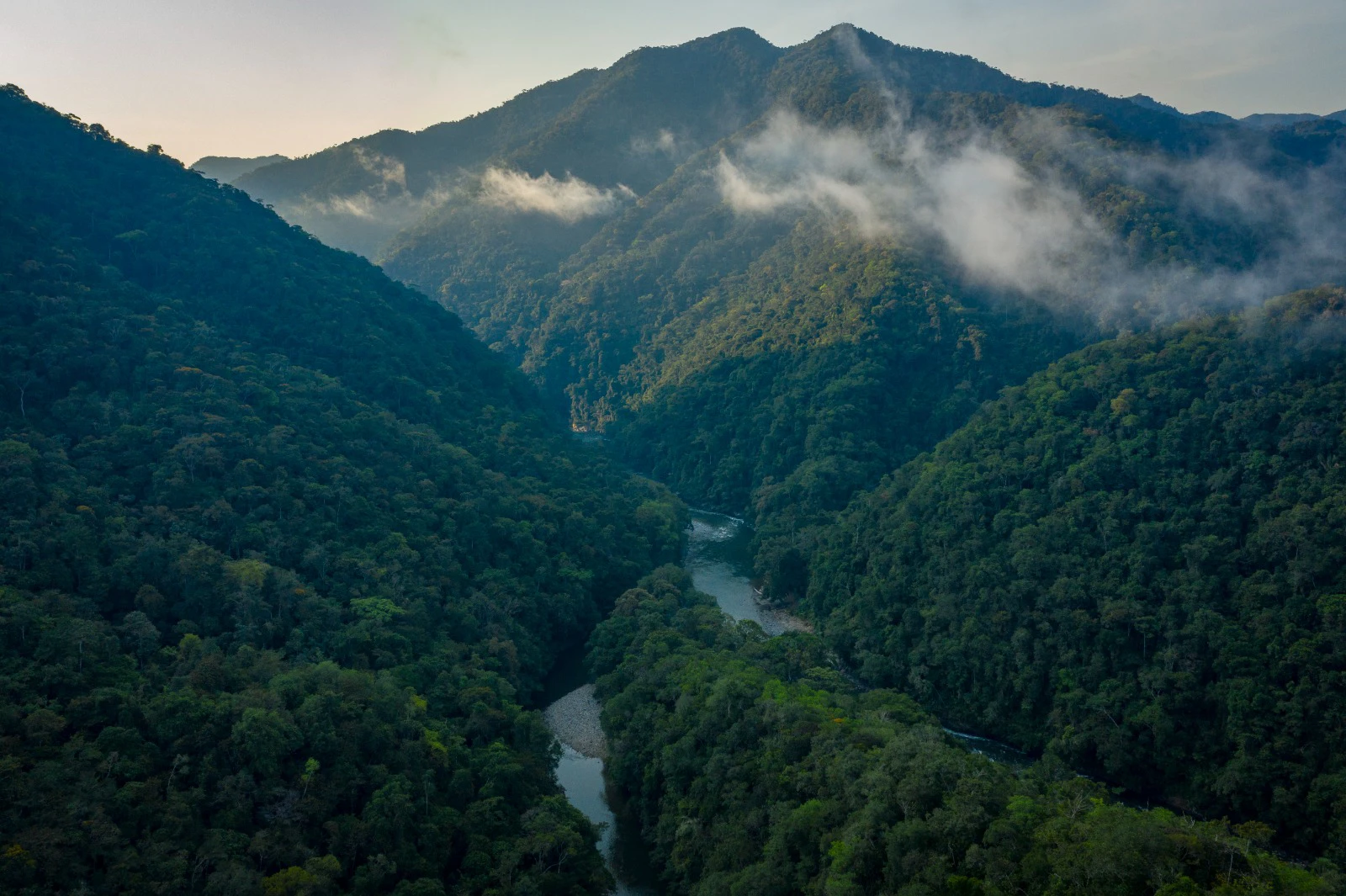
Although energy production remains essential to meet the country’s needs, it also comes with consequences for ecosystems. With tourism, population and economic activity growing since the 2017 peace agreements, energy demand continues to rise, leading to new dam projects and renewed concerns about their impact on local communities and the environment.
So how can Colombia meet its growing energy needs without repeating the consequences of the past and once again putting local communities and this region’s unique ecosystem at risk?
Responsible Tourism as an Alternative
With the emergence of responsible tourism in the region, a new path has gradually opened up. Through activities such as rafting and trekking, the Río Samaná has progressively become a tourist destination that helps showcase the territory while supporting local communities.
This alternative highlights the region’s landscapes, biodiversity and communities, while creating new sources of income for local residents and demonstrating the economic, cultural and natural value of the area.
The experiences are diverse, ranging from farm visits and day hikes to multi-day treks and multisport expeditions. Local communities and Expédition Colombia also organize events throughout the year, bringing together people from all walks of life who share a deep connection with this remarkable river, which continues to withstand the threats facing it. The Río Samaná has thus become a powerful symbol of resilience across Colombia.
It is within this approach that an eight-day journey combining trekking and rafting was created, allowing travelers to discover the Río Samaná while contributing to its preservation.
Samana Expedition 8 days
View tripA Multifaceted Expedition
A Combination of Different Sports
Departing from Medellín, the “100km Jungle Expedition Into the Heart of Colombia” takes you deep into the Río Samaná watershed, in eastern Antioquia. Covering nearly 100 km, this journey combines trekking and rafting to offer a complete sporting adventure.
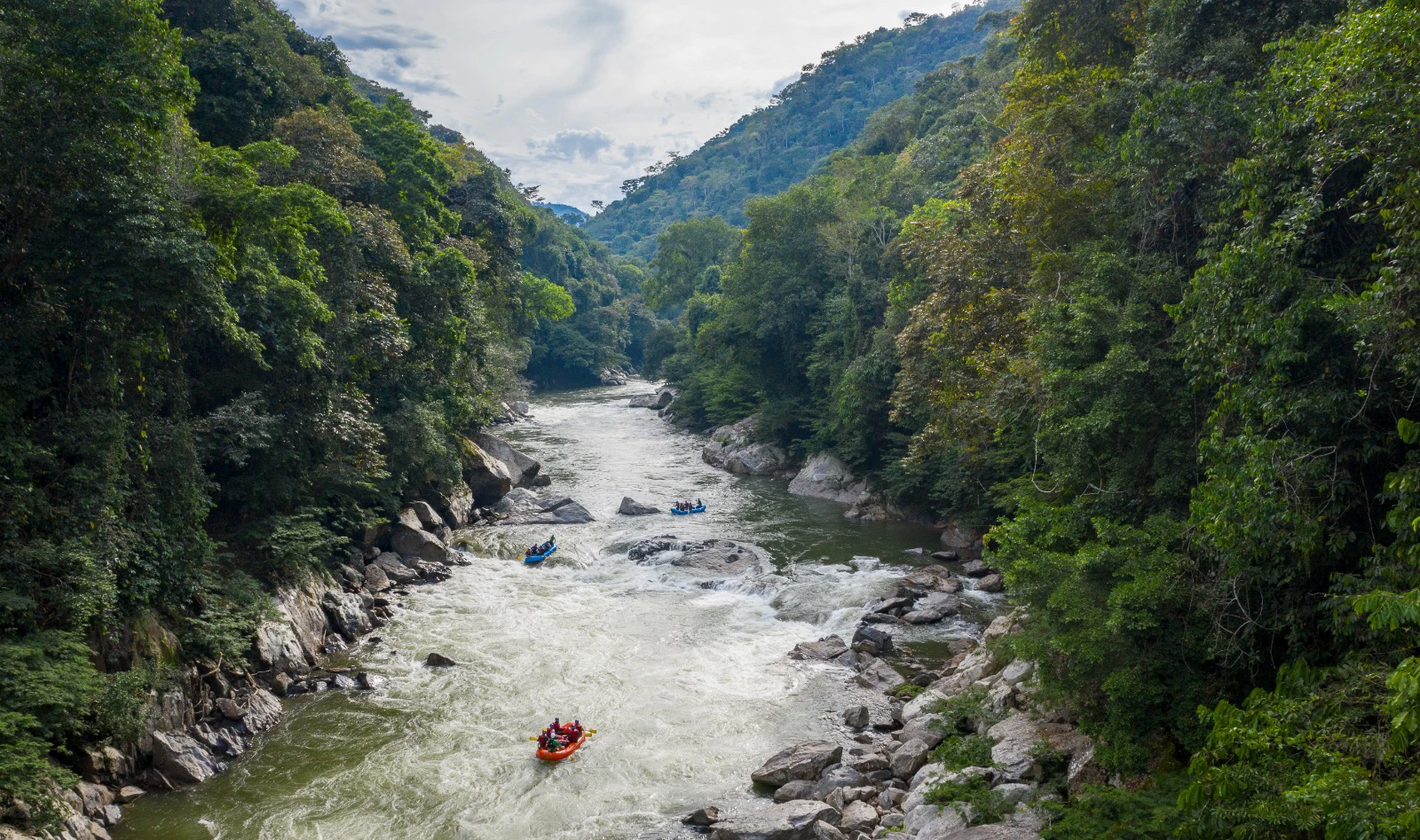
The first two days are dedicated to trekking, with nearly 23 km of hiking each day, amounting to around seven hours of walking through tropical rainforest. The fourth day marks the transition between the two disciplines, combining a final trekking section with the first stretches of rafting. The final three days are then entirely dedicated to descending the Río Samaná, with rafting sections ranging from 15 to 30 km per day, surrounded by nature that remains largely untouched.
From hikes through tropical rainforest to rafting down the river, this expedition offers a unique way to experience the region’s natural richness along one of Colombia’s last free-flowing rivers.
A Meeting with Local Communities
But this experience is about far more than a physical challenge. It offers a genuine immersion in the territory and its history through encounters with the people who call it home.
During the expedition, some nights are spent staying with local families, adding a more personal dimension to the journey. These moments provide an opportunity to share in their daily lives, discover their way of life and gain a deeper understanding of a region that was shaped for many years by armed conflict.
Traveling in small groups also encourages more authentic connections between visitors and local residents. Beyond the cultural experience, the journey offers an opportunity to understand the region’s current realities and the challenges faced by its communities, while creating an experience based on exchange and shared experiences.
Beyond the Trek: Initiatives to Protect the Río Samaná
Beyond organized expeditions, numerous initiatives are helping raise awareness of the Río Samaná and support its preservation.
Samaná Fest
Among these initiatives is Samaná Fest, an annual festival that brings together sport, culture and environmental commitment. Through kayaking competitions, rafting descents, cultural activities and encounters with local communities, the festival helps promote and protect the Río Samaná.
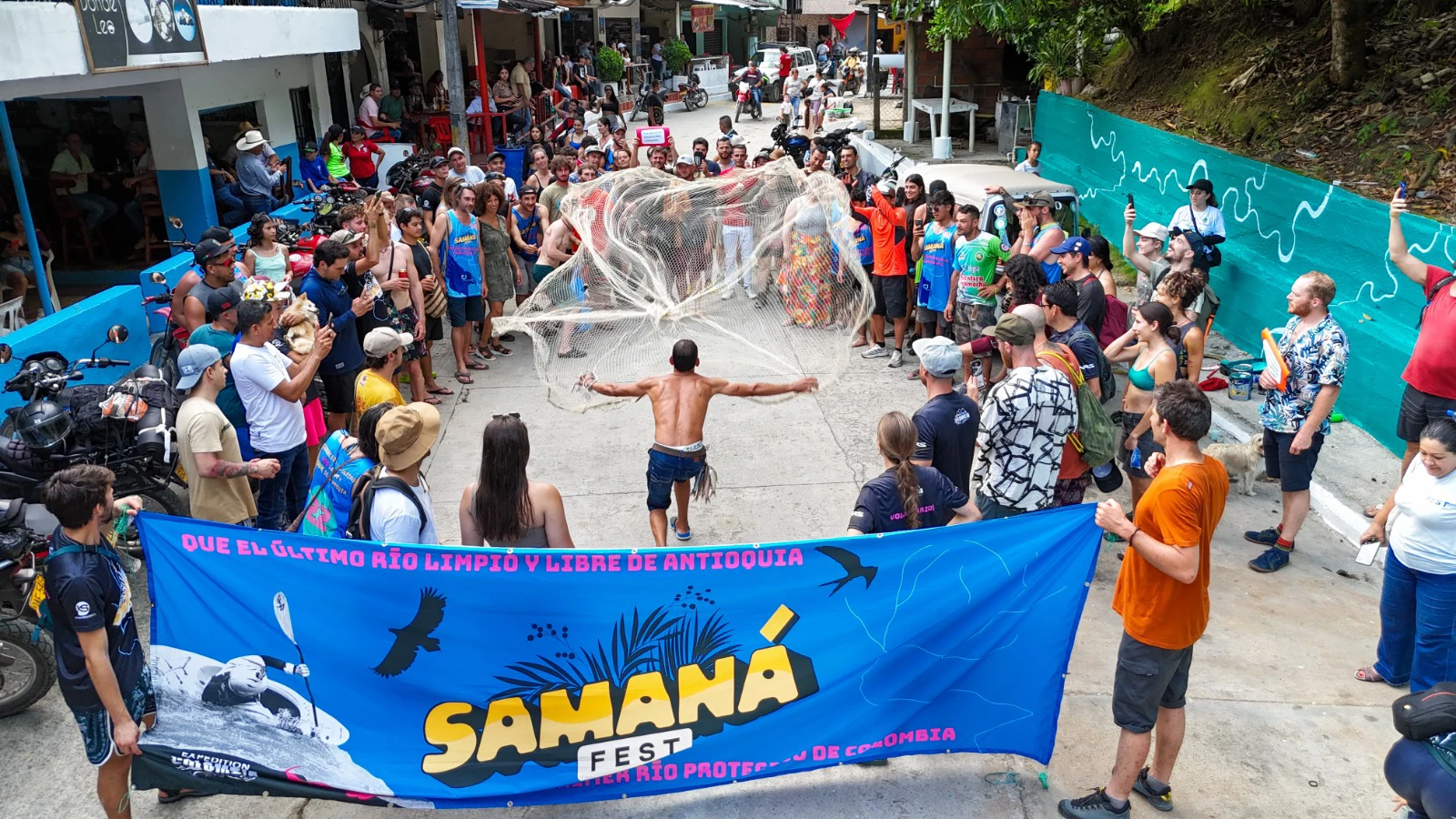
Every year, the festival attracts an increasingly diverse audience: local residents, guides, athletes, travelers, journalists and government representatives come together to defend and highlight the value of the Río Samaná.
Samana Fest
View tripStudents for Rivers Camp
Organized for the first time in Colombia and only the second time in South America, the “Students for Rivers Camp” is a 14-day program that brings together students from different fields, including law, science and media, to conduct research on the Río Samaná and the challenges surrounding its preservation.
The initiative aims to train a new generation of river ambassadors who can raise public awareness, highlight the importance of the watershed and contribute to its defense against the threats posed by hydroelectric dam projects.
Through workshops, conferences and meetings with local communities, participants gain a deeper understanding of the environmental, social and legal challenges surrounding the Río Samaná, while developing the skills needed to become actively involved in its preservation.
What Happens Next?
The Samaná is still fighting to remain free. But the pressure is not going away. Every traveler who descends the river, every participant in the festival or student camp, and every article shared helps tip the balance.
Because ultimately, the question is no longer simply: “Should a dam be built?”
The real question is: “What value do we truly place on a river that still flows free?”
The real question is: “What value do we truly place on a river that still flows free?”